Logo Koolewong, Point Clare and Tascott Progress Association Inc.

including West Gosford south of the Central Coast Highway

PO Box 193
Woy Woy
NSW 2256

kpctpa@bigpond.com.au

Dear Members and Residents,

Working Bee at Goodaywang Reserve: Next date is 3rd February @ 9:00AM:  Click here for more information

District, Origin and Characters

Approximate area in square rectangle The Koolewong, Point Clare and Tascott Progress Association covers areas similar to that defined in the Community Profile: 2006 and 2001 Enumerated Census Information for Point Clare - Tascott - Koolewong, published by the Gosford City Council. These areas are shown on the map on the right.

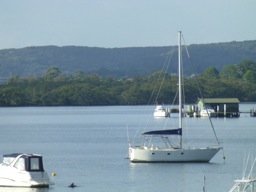
The above publication characterises the locality being rural and residential, that is, the rural areas are in the west which is part of Brisbane Water National Park, and residential areas are in the east, along the waterfront facing Brisbane Water.

Our Progress Association defines the boundaries as follows. On the north, is the Central Coast Highway which means that West Gosford - south of the highway is included. The other boundaries are Brisbane Water in the east, Woy Woy Bay in the south thus Parkes bay is included. The western boundary is the suburb of Kariong and Woy Woy road.

Origin

Sourced from Community Profile: 2006 and 2001 Enumerated Census Information for Point Clare - Tascott - Koolewong, Gosford City Council (2006):

"Point Clare is thought to be named after County Clare in Ireland.

Tascott is named after Thomas Alison Scott, an early land holder and agricultural pioneer.
 
Koolewong is named from an Aboriginal word meaning ‘koalas there'.

Research to date suggests that this area was part of the country of the Guringai people.

Settlement of the area dates from the late 1830s. Cattle raising and timber getting were early uses of the land in the area.

The coming of the railway in the late 1880s led to growing interest from guest house operators and holiday makers.

Before Brisbane Water Drive was constructed in the early 1940s, rail transport was the fastest means of travel to Woy Woy or Gosford.

Significant development occurred during the post-war years, particularly from the 1960s. The population increased slightly during the early 1990s, and then was relatively stable between 1996 and 2006.

Major features of the area include Brisbane Water National Park, Kariong Hill Lookout, Point Clare Cemetery, Goodaywang Reserve, Koolewong Foreshore Reserve and a school."


Latest News

  • Train Noise Page Updated 12-11-2011
 
  • April 2011: RTA: Hazard Reduction. Removal of Casuarina trees and shoulder rehabilitation along Brisbane water drive, along Koolewong and Tascott.